AMENDMENTS · HOW THE XRPL CHANGES
How the XRP Ledger gets new features
Validators vote. More than 80% for two weeks. Then it's on for everyone.
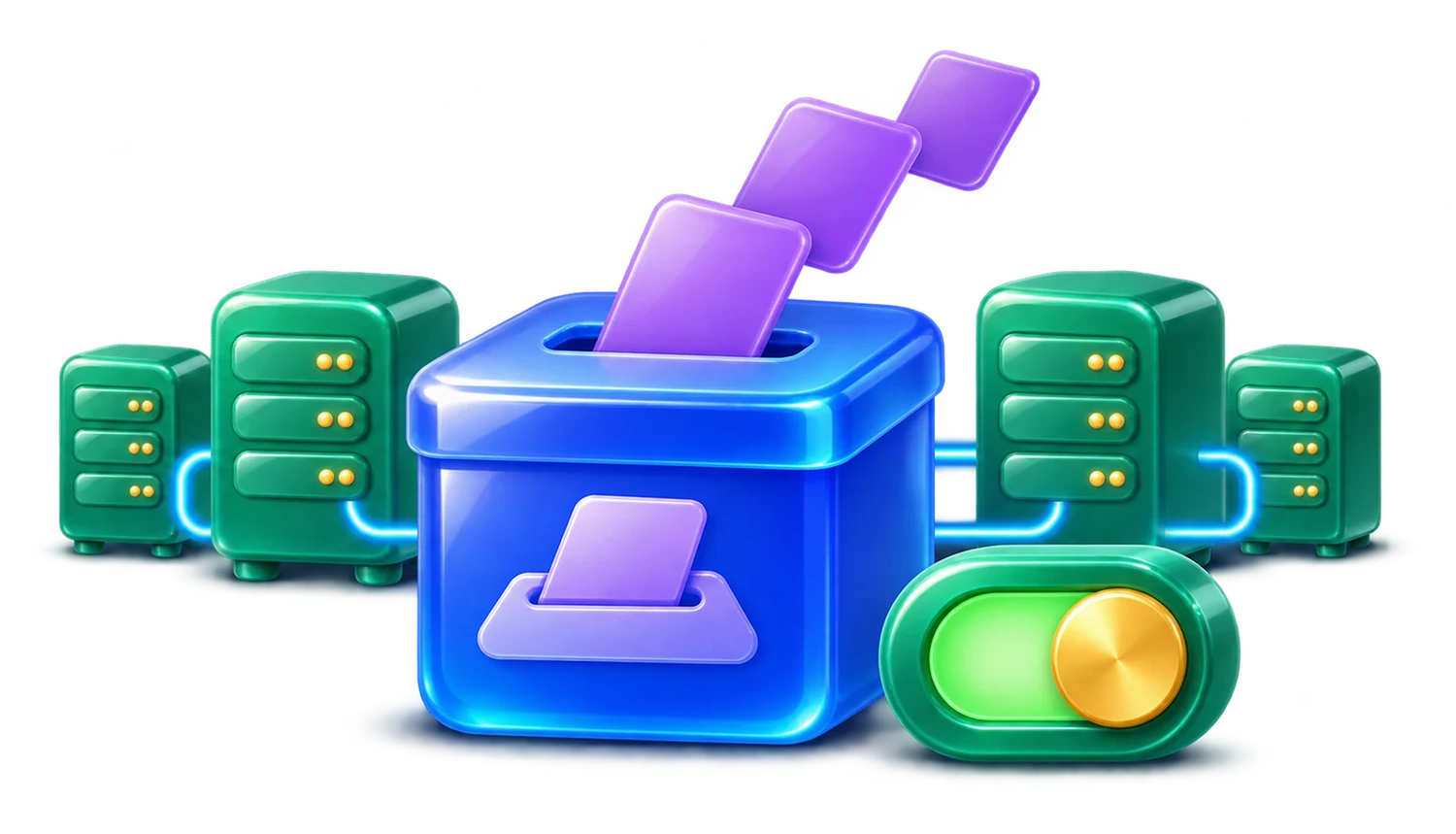
The XRP Ledger has no hard forks and no single owner who flips a switch. New features and fixes arrive as amendments: trusted validators vote on each one, and it turns on only after strong support that lasts.
- Checking the XRP Ledger…
Simulator
How an amendment turns on
Six steps, from new code to a new rule.
- 01

A change is proposed
Developers build a feature or a fix into the XRP Ledger server software. It gets a name, like LendingProtocol, and an ID.
- 02

Servers upgrade
Operators install the new version. The code is there, but it stays switched off until the network agrees.
- 03

Validators vote
Around every flag ledger, validators send their votes. Not voting for an amendment counts as voting against it.
- 04

More than 80%
When more than 80% of trusted validators support it, the ledger records that it got a majority, and a two-week clock starts.
- 05

Two weeks of support
Support must stay above 80% for the whole two weeks. If it drops, the clock stops and has to start again later.
- 06

On for everyone
After two weeks it turns on for the whole network, permanently. Servers that don't support it become amendment blocked until they upgrade.
What makes it different
- No hard forks. The whole network switches at the same ledger, so it never splits into two chains.
- Strong agreement. More than 80% of trusted validators must agree, and keep agreeing for two weeks.
- Time to react. The two weeks give the community time to discuss and validators time to change their vote.
- Permanent. Once on, an amendment can't be switched off – only a new amendment can change it.
Who takes part?
 Validators
 Server operators
 Developers
Exchanges, wallets and apps follow the voting so they can upgrade in time and use new features from day one.
Key concepts, in plain English
Good to know
Operators should upgrade before an amendment turns on: an amendment-blocked server can no longer process ledgers. Votes can also change, so a feature with a majority today is not certain until the two weeks have passed.
Educational content. Not financial advice.Test your knowledge
5 questions · Every answer explained